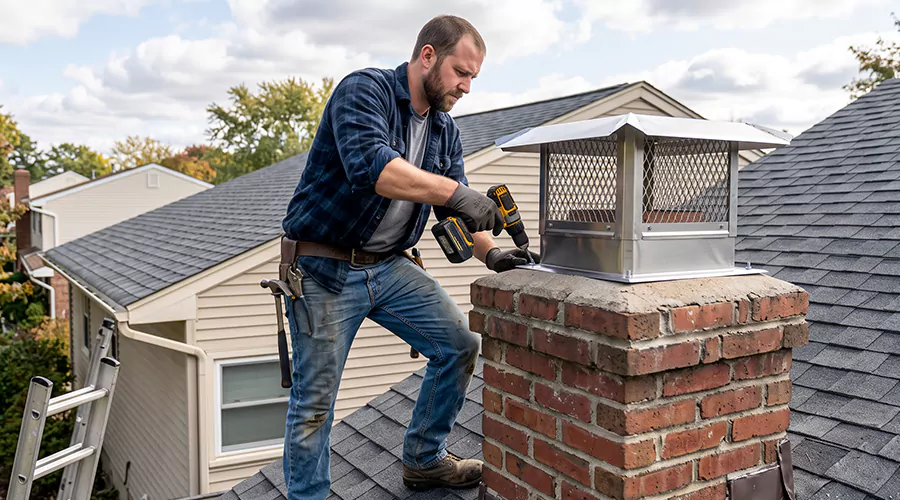
How Much Does a Chimney Cap Cost?
Estimate chimney cap costs based on material, size, design, chimney height, installation requirements, labor, and the type of cap needed for protection.




Based on 500+ Reviews

Proudly American
Owned & Operated

A chimney cap typically costs between $150 and $1,000, depending on the type of cap, material, chimney size, installation difficulty, and whether the chimney requires additional repairs before installation.
A chimney cap is an important part of a chimney system because it helps prevent rain, snow, debris, leaves, and animals from entering the chimney opening. Installing a properly sized chimney cap can help reduce moisture problems, protect the chimney structure, and improve the overall lifespan of the fireplace system.
The total cost depends on whether you are replacing an existing chimney cap, installing one for the first time, or choosing a custom-designed cap.
The price of a chimney cap varies depending on the material and design.
| Type of Chimney Cap | Average Cost Range |
|---|---|
| Basic galvanized steel chimney cap | $150–$300 |
| Stainless steel chimney cap | $300–$700 |
| Copper chimney cap | $700–$1,500+ |
| Custom chimney cap | $500–$2,000+ |
| Multi-flue chimney cap | $500–$1,500 |
Basic chimney caps are usually more affordable, while premium materials and custom designs increase the cost.
A chimney cap is a protective cover installed over the top opening of a chimney.
It typically includes:
The main purpose of a chimney cap is to block unwanted materials from entering the chimney while allowing smoke and gases to exit properly.
A chimney cap provides several important benefits.
It helps prevent:
Without a chimney cap, water can enter directly into the chimney opening and contribute to:
Several factors determine the final price of a chimney cap installation.
The material is one of the biggest cost factors.
Galvanized steel caps are usually the most affordable option.
Benefits include:
However, they may not last as long as higher-quality materials because they can eventually rust.
Stainless steel caps are a popular choice because they offer durability and corrosion resistance.
Benefits include:
They usually cost more than galvanized steel but provide better long-term value.
Copper caps are a premium option.
Benefits include:
Copper chimney caps usually have a higher upfront cost.
The size of the chimney affects the cost of the cap.
A larger chimney may require:
A single-flue chimney usually costs less than a large multi-flue chimney.
The chimney design affects the type of cap required.
| Type | Description |
|---|---|
| Single-flue cap | Covers one chimney opening |
| Multi-flue cap | Covers multiple flue openings |
| Custom cap | Designed for unique chimney shapes |
Multi-flue chimney caps generally cost more because they require larger materials and more complex installation.
Installation costs can vary depending on chimney access.
Factors that may increase installation difficulty include:
Additional safety equipment may be needed for difficult installations.
Sometimes chimney cap installation requires additional repairs.
Before installing a new cap, the chimney may need repairs such as:
Installing a cap on a damaged chimney may not solve existing moisture problems.
A chimney cap may need replacement if you notice:
A damaged chimney cap may no longer provide proper protection.
Operating a chimney without a cap can create several problems.
Possible issues include:
Moisture entering through an open chimney can contribute to masonry deterioration over time.
Replacing an existing chimney cap usually costs between $200 and $800, depending on:
A damaged cap should be replaced rather than repeatedly repaired if it is no longer providing proper protection.
Some basic chimney caps are designed for simpler installation, but chimney access can make the process challenging.
DIY installation can be difficult because of:
A poorly installed chimney cap may:
Professional installation may be recommended for complex chimney systems.
The lifespan of a chimney cap depends on the material.
| Material | Typical Lifespan |
|---|---|
| Galvanized steel | 5–10 years |
| Stainless steel | 15–25+ years |
| Copper | 30+ years |
Weather exposure and maintenance can affect how long a chimney cap lasts.
The best chimney cap depends on:
Important considerations include:
A properly fitted cap provides better protection than a low-quality option that does not match the chimney.
Regular maintenance can extend the life of a chimney cap.
Helpful steps include:
A blocked or damaged screen can affect chimney airflow and performance.
These two components work together but serve different purposes.
| Chimney Cap | Chimney Crown |
|---|---|
| Covers chimney opening | Covers chimney top surface |
| Prevents rain and animals from entering | Directs water away from chimney |
| Usually metal | Usually concrete or masonry |
| Protects flue opening | Protects chimney structure |
A chimney often needs both components for complete moisture protection.
Yes. A chimney cap is a relatively small investment that can help prevent expensive moisture and masonry problems.
Benefits include:
Installing a quality chimney cap can help protect the entire fireplace system.
A chimney cap typically costs between $150 and $1,000, depending on the material, size, design, and installation requirements. Chimney caps are an important protective component that helps prevent rain, debris, and animals from entering the chimney. Choosing the right material and ensuring proper installation can help reduce moisture problems and extend chimney life. Regular inspections and maintenance of the chimney cap can help homeowners identify damage early and avoid more expensive repairs.
A chimney cap usually costs between $150 and $1,000 depending on material, size, and installation requirements.
Stainless steel and copper are popular choices because they provide durability and long-term protection.
Most masonry chimneys benefit from a chimney cap because it helps prevent water, debris, and animals from entering.
A chimney cap can last from several years to several decades depending on the material and maintenance.
A chimney cap helps prevent water from entering through the chimney opening, but it does not fix leaks caused by damaged flashing, crowns, or masonry.
Yes. A severely rusted or damaged cap may no longer provide proper protection and should be replaced.
Estimate chimney cap costs based on material, size, design, chimney height, installation requirements, labor, and the type of cap needed for protection.
